
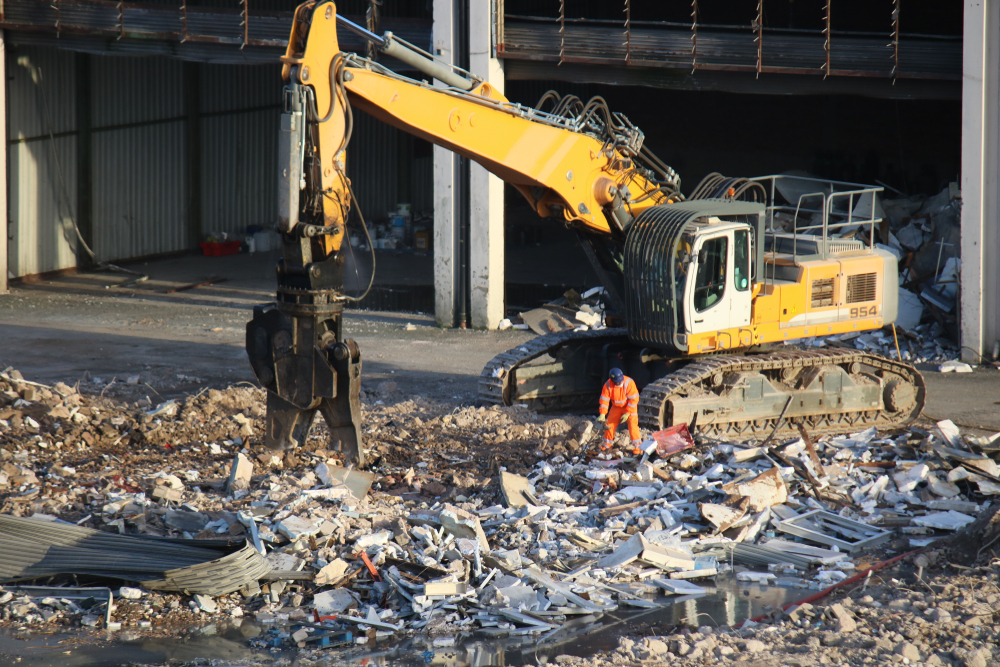
Commercial demolition is a major step for any business owner, property manager, or construction firm. Whether you are clearing an old warehouse in Wagga Wagga, removing a disused factory in Griffith, or demolishing a commercial shed in Albury, the process involves more than simply bringing a structure down.
Read on to learn about commercial demolition Riverina, including the permits and approvals required, safe handling of asbestos, and a walkthrough of the entire commercial demolition process.
What Is Commercial Demolition?
Commercial demolition means the removal of buildings and structures, including factories, warehouses, offices, retail properties, silos, and agricultural infrastructure. It can involve full structural removal, partial demolition, or selective deconstruction, where usable materials are salvaged before the rest of the structure is cleared.
What Do Commercial Demolition Services in NSW Include?
A commercial demolition contractor in NSW handles everything from pre-demolition surveys through to final site clearance. The scope of work is shaped by NSW legislation, council requirements, and the specific conditions of each site.
Working with a licensed NSW contractor helps ensure your project meets legal requirements and stays safe from start to finish.
What Happens During a Site Assessment?
A site assessment is always the first step of a commercial demolition project.
This normally includes:
- An assessment to understand how the building is constructed and how it will come down safely
- The identification of hazardous materials, including asbestos, lead paint, and other regulated substances
- A review of utility connections, including gas, water, and electricity
- Assessment of site access and neighbouring properties
What Demolition Methods Are Used?
The method used depends on the size and type of structure, site access, and what happens to the site afterwards.
Some of the most common methods:
- Mechanical
- The use of excavators and high-reach equipment to bring down the structure
- Selective
- The removal of specific sections while leaving the rest intact
- Deconstruction
- The structure is dismantled to salvage usable materials such as steel, timber, and concrete
- Interior strip-outs
- Removal of internal fit-outs, ceilings, partitions, and fixtures before structural demolition
How Is Demolition Waste Managed?
Waste management is the sorting, removal, and disposal of materials from a demolished structure in accordance with NSW EPA requirements.
- Concrete, steel, and timber are sorted on-site, where possible, for recycling or resale
- Asbestos and other hazardous materials are normally handled and disposed of by licenced professionals
- All remaining debris and waste are taken to licensed disposal facilities
- The site is cleared and levelled, ready for the next phase of development
What Permits and Approvals Are Required for Commercial Demolition in NSW?
You normally need council approval before demolishing a commercial building in NSW. The type of approval depends on the size and location of the structure and the land’s zoning.
- Development Application (DA)
- Needed for most commercial demolition projects from your local council.
- Complying Development Certificate (CDC)
- A faster approval process for straightforward projects.
- SafeWork NSW notification
- For larger demolition projects or where hazardous materials are present.
- Utility disconnections
- Disconnection of all services must be arranged, via the relevant provider, before work begins.
- Neighbour notification
- Often required, especially in built-up areas.
Note: Permit timeframes vary between councils. Factor in at least several weeks for approvals when planning your project timeline.
How Is Asbestos Handled in Commercial Demolition?
Asbestos is present in a large number of commercial buildings constructed before 1990 across regional NSW.
Asbestos must be identified, removed, and disposed of by a licensed contractor before any structural demolition begins.
How Is Asbestos Identified Before Demolition?
A pre-demolition asbestos survey is carried out by a qualified assessor to identify the location, type, and condition of any asbestos-containing materials on the site.
The two types of asbestos:
- Friable asbestos
- The most dangerous type. Easily crumbles with the use of tools or by hand and releases fibres into the air. Requires a Class A licensed removalist.
- Non-friable asbestos
- Bonded asbestos is often found in cement sheeting. Less immediately dangerous but still regulated.
Only a qualified asbestos assessor can carry out an asbestos survey and issue the required documentation.
What Are the Rules for Safe Asbestos Removal in NSW?
SafeWork NSW sets out clear requirements for asbestos removal on commercial sites.
Cutting corners on asbestos removal carries serious health risks and significant legal penalties under NSW law.
Asbestos regulations include:
- The removal of more than 10 square metres of non-friable asbestos requires a Class B licence
- Friable asbestos may only be removed by a Class A licence holder
- SafeWork NSW must be notified before licensed asbestos removal begins
- Air monitoring should be conducted during and after removal
- All asbestos waste must be disposed of at an approved facility, with a waste transport certificate (manifest) completed
How Does the Commercial Demolition Process Work?
Commercial demolition follows a clear sequence of steps. Understanding the process helps you plan your timeline and know what to expect at each stage.
Step 1: Site Inspection
During the site inspection, the actual building or structure is reviewed, along with any potential access issues or other site-specific factors. This forms the basis of the quote and project plan.
Step 2: Local Authority Permits and Approvals
Although the property owner is responsible for obtaining relevant approvals, your contractor will handle the process.
Step 3: Handling of Hazardous Materials
Asbestos and other hazardous materials must be removed and disposed of before the actual demolition begins.
Step 4: Utility and Service Disconnections
Services and utilities must be disconnected by the relevant providers.
In the Riverina, this often involves contact with Essential Energy and local water authorities.
Step 5: Demolition
The actual demolition begins when hazardous materials have been removed and utilities have been disconnected. The site is fenced, signs are erected, and exclusion zones are established before any machinery moves in.
Step 6: Site Clearance
Debris and waste materials are sorted and transported to licensed disposal or recycling facilities. The site is cleared and graded to the agreed finish level.
Step 7: Site Handover
Completion and site handover normally follow a final inspection. Documentation is provided, including waste-disposal records, asbestos-clearance certificates, and any council sign-offs.
Frequently Asked Questions About Commercial Demolition in the Riverina
Do I need council approval before demolishing a commercial building in NSW?
Yes, in most cases. Commercial demolition requires either a Development Application (DA) approved by your local council or a Complying Development Certificate (CDC). Contact your local council early to confirm what applies to your property.
How long does commercial demolition take?
It depends on the size of the property and the complexity of the project. Project timescales range from a few days to several weeks. Permit approval timeframes, asbestos removal, and utility disconnections all add to the overall timeline.
Who is responsible for obtaining demolition permits?
The property owner is generally responsible, though many demolition contractors will assist with the permit process. Clarify this with your contractor at the outset.
Is asbestos common in older commercial buildings in the Riverina?
Yes. Buildings constructed before 1990, particularly sheds, factories, and farm structures, frequently contain asbestos cement sheeting. A pre-demolition asbestos survey is essential before any work begins.
Can materials from a demolished building be reused or sold?
Often yes. Steel, structural timber, and concrete may have salvage or recycling value. A good contractor will identify salvageable materials during the site assessment and factor this into the project plan.
What does the site look like after demolition is complete?
At handover, the site should be cleared of all debris, graded to an agreed level, and accompanied by all required documentation, including waste disposal records and asbestos clearance certificates. The scope of site remediation should be agreed in writing before the project begins.
How do I choose the right demolition contractor in the Riverina?
Look for a contractor who holds a current NSW demolition licence and relevant asbestos removal licences, has experience working with Riverina councils, provides a clear and detailed written quote, and communicates honestly throughout the process.
Why Work With a Local Riverina Demolition Contractor?
Riverina Demolition is locally owned and operated, with direct experience across Wagga Wagga, Griffith, Albury, Leeton, Narrandera, Temora, Junee, Gundagai, and Hay. The team holds the necessary NSW licences for commercial demolition and asbestos removal, and handles every stage of the project, from permits to site handover, with clear communication and no surprises.
To discuss your commercial demolition project, contact Riverina Demolition for a site inspection and obligation-free quote.


Leave A Comment