
Asbestos is still found in thousands of older properties across regional NSW. If you are planning a renovation, demolition, or clean-up and you suspect asbestos is present, you may wonder whether you can handle it yourself.
The short answer is: sometimes, but only under strict conditions. Asbestos removal NSW has serious, often fatal health risks and is best handled by professionals, but this article will help you to understand what you need to know about DIY asbestos removal NSW.

What Is Asbestos and Where Is It Found?
Asbestos was common in Australian construction from the 1940s through to the mid-1980s. It was affordable, and properties such as fire resistance and durability made it a popular building material. However, when disturbed, it releases microscopic fibres that are highly dangerous when inhaled.
If your property was built or renovated during the building boom years, above, there is a good chance it contains asbestos somewhere. If you are unsure, have it tested by a qualified asbestos assessor before doing anything else.
Is It Legal to Remove Asbestos Yourself in NSW?
Under NSW law, homeowners may remove a limited amount of asbestos themselves, but the rules are specific and non-negotiable.
You may legally carry out DIY asbestos removal only if all of the following apply:
- The material is non-friable (bonded) asbestos, such as asbestos cement sheeting
- The total area is 10 square metres or less
- The material is in good condition and is not crumbling or damaged
- You follow the SafeWork NSW Code of Practice throughout removal and disposal
If any of these conditions are not met, the removal must be carried out by a licensed asbestos removalist. Attempting to remove it yourself in those circumstances is illegal and can attract serious fines.
What Is Friable vs Non-Friable Asbestos?
Understanding the difference between these two types is critical before you touch anything.
- Non-friable asbestos (also called bonded asbestos) is asbestos that is mixed with a binding material, such as cement. It is firm and unlikely to release fibres if left undisturbed. Asbestos cement sheeting is the most common example.
- Friable asbestos can easily be crumbled, crushed, or reduced to powder, even by hand pressure. It releases fibres far more readily and is classified as high-risk.
Friable asbestos must always be removed by a Class A licensed asbestos removalist, regardless of the quantity. There are no exceptions.
The 10m² Rule Explained
The 10-square-metre limit is the threshold that determines whether a homeowner or tradesperson can legally remove asbestos without a licence.
To put that in perspective:
- 10m² is roughly equivalent to four standard sheets of asbestos cement
- It applies to the total area being removed in one job, not a single piece
- The limit applies to non-friable material only; for friable asbestos, there is no DIY option at any quantity
What Are the Health Risks of DIY Asbestos Removal?
Even where DIY removal is technically legal, the health risks are serious and long-lasting. Once inhaled, asbestos fibres cannot be expelled from the lungs.
NOTE: DIY asbestos removal NSW is NOT RECOMMENDED.
Diseases caused by asbestos exposure include:
- Mesothelioma, asbestosis and lung cancer, with a higher risk for smokers
These illnesses typically develop 20 to 40 years after exposure, so the impact of careless handling today may not become apparent for decades.
What PPE and Safety Equipment Do You Need?
If you are legally permitted to remove a small amount of non-friable asbestos yourself, using the correct personal protective equipment (PPE) is essential. Standard dust masks are inadequate for asbestos work.
Required safety equipment includes:
- A P2 or P3 respirator, fitted and tested for a correct seal
- Full disposable coveralls (Tyvek suit)
- Disposable gloves and safety glasses or goggles
- Protective footwear that can be decontaminated or disposed of
- Heavy-duty plastic sheeting to contain the work area
You must also ensure no other people or pets are present in or near the work area during removal.
How Must Asbestos Be Disposed of in NSW?
Disposal is one of the most tightly regulated parts of asbestos handling. Incorrect disposal is a serious offence under NSW law and can result in substantial penalties.
When disposing of asbestos waste, you must:
- Keep the material wet throughout removal and transport to minimise fibre release
- Remove sheets whole; never cut, drill, break, or crush them
- Double-wrap the material in heavy-duty plastic sheeting
- Seal all edges securely with tape and label the package clearly as “ASBESTOS WASTE”
- Transport it directly to a licensed asbestos disposal facility
Asbestos waste must never be:
- Placed in a household rubbish bin or general skip
- Taken to a facility not licensed to accept asbestos waste
- Buried on site or burned
- Broken apart to fit into smaller containers
If you remove more than 10m² or 100kg of asbestos waste, you are also required to record and track the disposal using the NSW EPA’s WasteLocate system.
Where Can You Take Asbestos Waste in the Riverina?
In the Wagga Wagga local government area, the Gregadoo Waste Management Centre is the only EPA-licensed facility permitted to accept asbestos-containing waste.
For properties in other Riverina locations, contact your local council to identify the nearest licensed disposal facility. Requirements and booking procedures can vary between councils.
What Happens if You Break the Rules?
Non-compliance with NSW asbestos regulations carries real consequences for both homeowners and tradespeople. SafeWork NSW actively monitors and enforces these rules.
Fines for improper asbestos disposal in NSW can be thousands of dollars for individuals and even more for businesses. The financial and personal cost of getting it wrong is far greater than the cost of doing it correctly from the start.
When Must You Use a Licensed Asbestos Removalist?
A licensed asbestos removalist NSW is legally required in the following situations:
- The material is friable asbestos, of any quantity
- The area of non-friable asbestos exceeds 10m²
- The material is in poor condition, crumbling, or damaged
- The work is required at a commercial, industrial, or rental property
- The removal is part of a demolition or major renovation project
In all of these cases, attempting to carry out the work without a licence is illegal.
Class A vs Class B Licences
Not all asbestos licences are equal. The type of licence a removalist holds determines what work they are legally permitted to do.
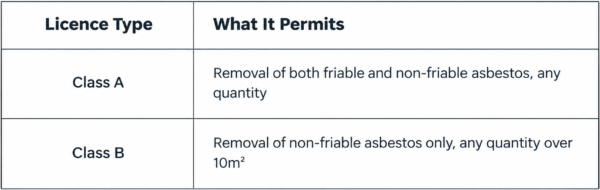
For any commercial or industrial demolition project, or for work involving suspected friable asbestos, you should always engage a Class A licensed removalist. You can verify a removalist’s licence through the SafeWork NSW licence register.
Why Professional Removal Is the Safer Choice
Even when the law permits a homeowner to remove a small quantity of asbestos themselves, the practical risks and complexity involved make professional removal a much wiser investment.
What you get with a professional asbestos removalist:
- A site inspection to identify asbestos-containing materials (ACMs)
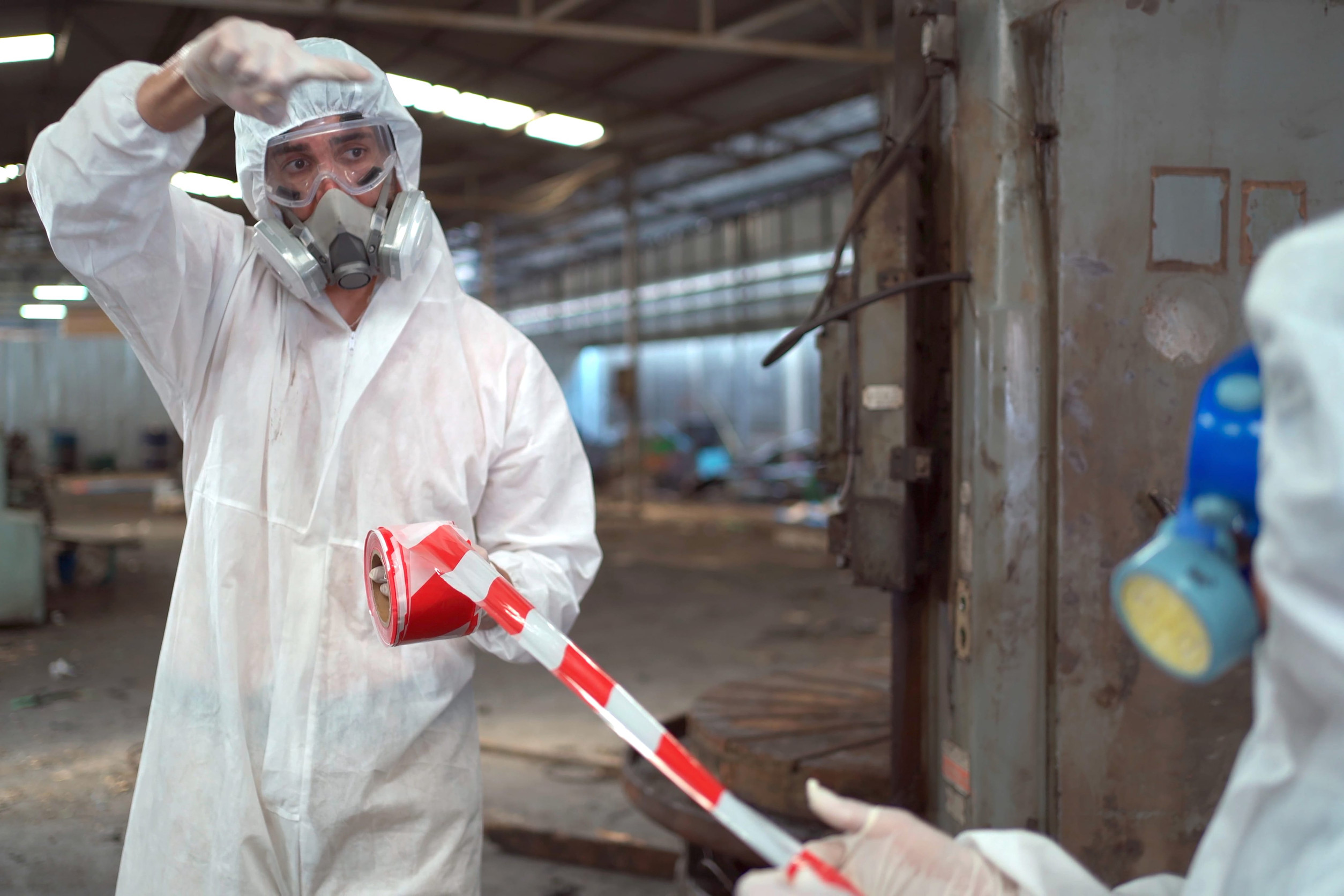
- Sealed and controlled work zones to restrict site access and prevent cross-contamination
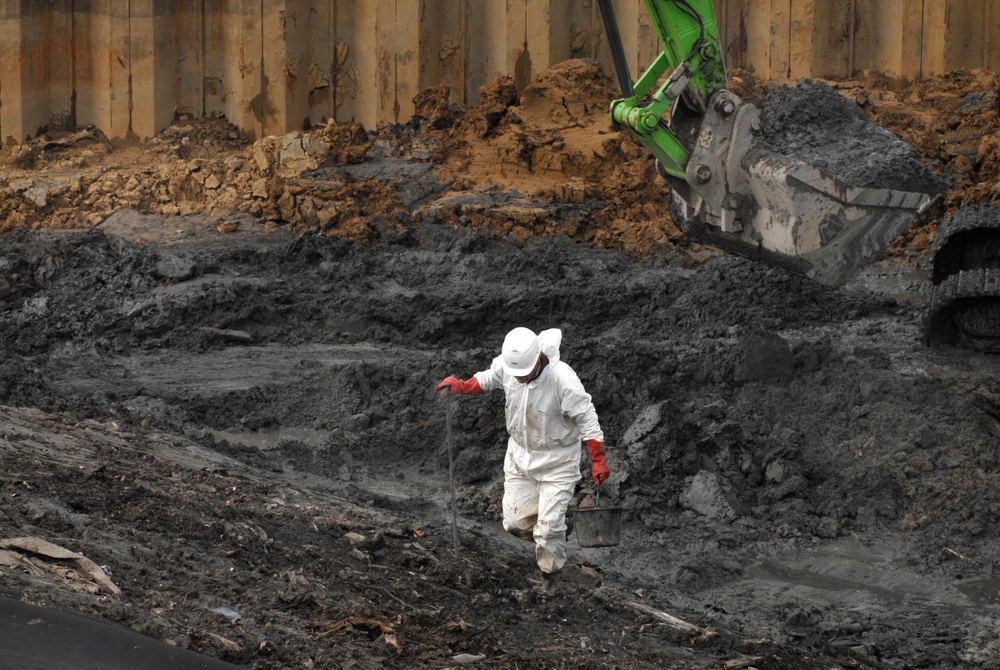
- Workers wear PPE and use safe, proven removal methods
- Asbestos waste is sealed, labelled and taken to licensed facilities, with full documentation
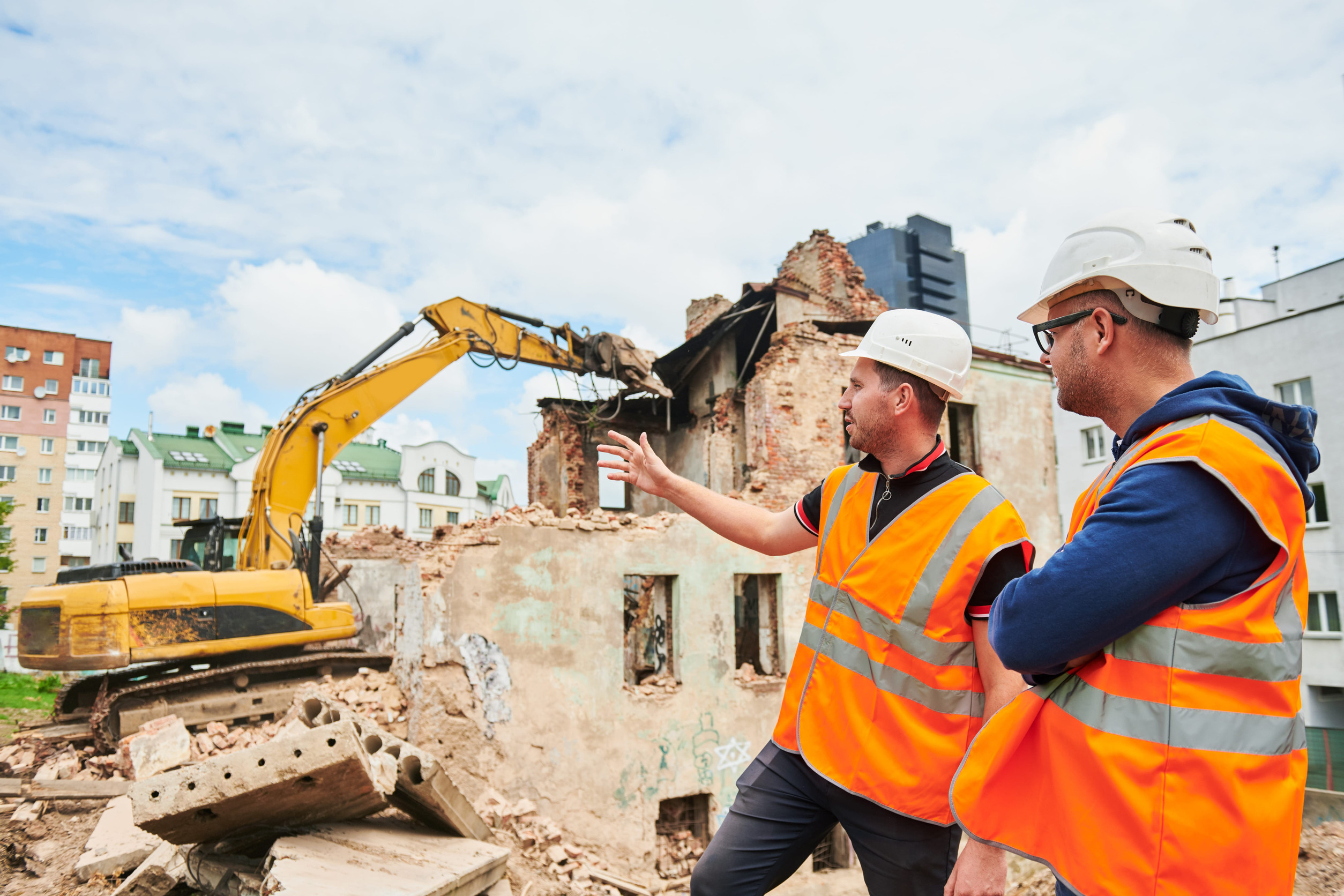
When asbestos removal is required as part of a demolition or site clearance project, integrating it into the overall project plan, managed by professionals, significantly reduces delays, cost blow-outs, and compliance risks.
Frequently Asked Questions
Can a homeowner remove asbestos themselves in NSW?
Yes, but only if the material is non-friable, the total area is 10 m² or less, the material is in good condition, and all SafeWork NSW safety requirements are met.
Is there a limit to how much asbestos a tradesperson can remove without a licence?
Yes. A tradesperson can remove up to 10m² of non-friable asbestos on behalf of a homeowner, but must follow the SafeWork NSW Code of Practice and hold proof of required asbestos training.
Can I put asbestos waste in a skip bin?
Absolutely not. Asbestos waste must never be placed in a skip bin or general waste container. It must be double-wrapped, labelled, and taken to a licensed disposal facility.
Talk to a Local Expert Before You Start
We are Riverina Demolition, and we have been working with property owners, businesses, and construction firms across Wagga Wagga, Griffith, Albury, Leeton, Narrandera, Temora, Junee, Gundagai, and Hay for years. We understand the challenges of working in regional NSW, where older building stock means asbestos is a reality on many sites.
When asbestos is present on your property, we do not recommend guessing. We are a trusted licensed asbestos removalist NSW, following all SafeWork NSW requirements, and handling asbestos removal and disposal through EPA-approved facilities. Whether you are planning a full commercial demolition, a partial strip-out, or simply need advice about what to do next, we are here to help.
Give us a call or reach out online. We will give you straight answers, a clear plan, and a fair quote, with no runaround.


Leave A Comment