
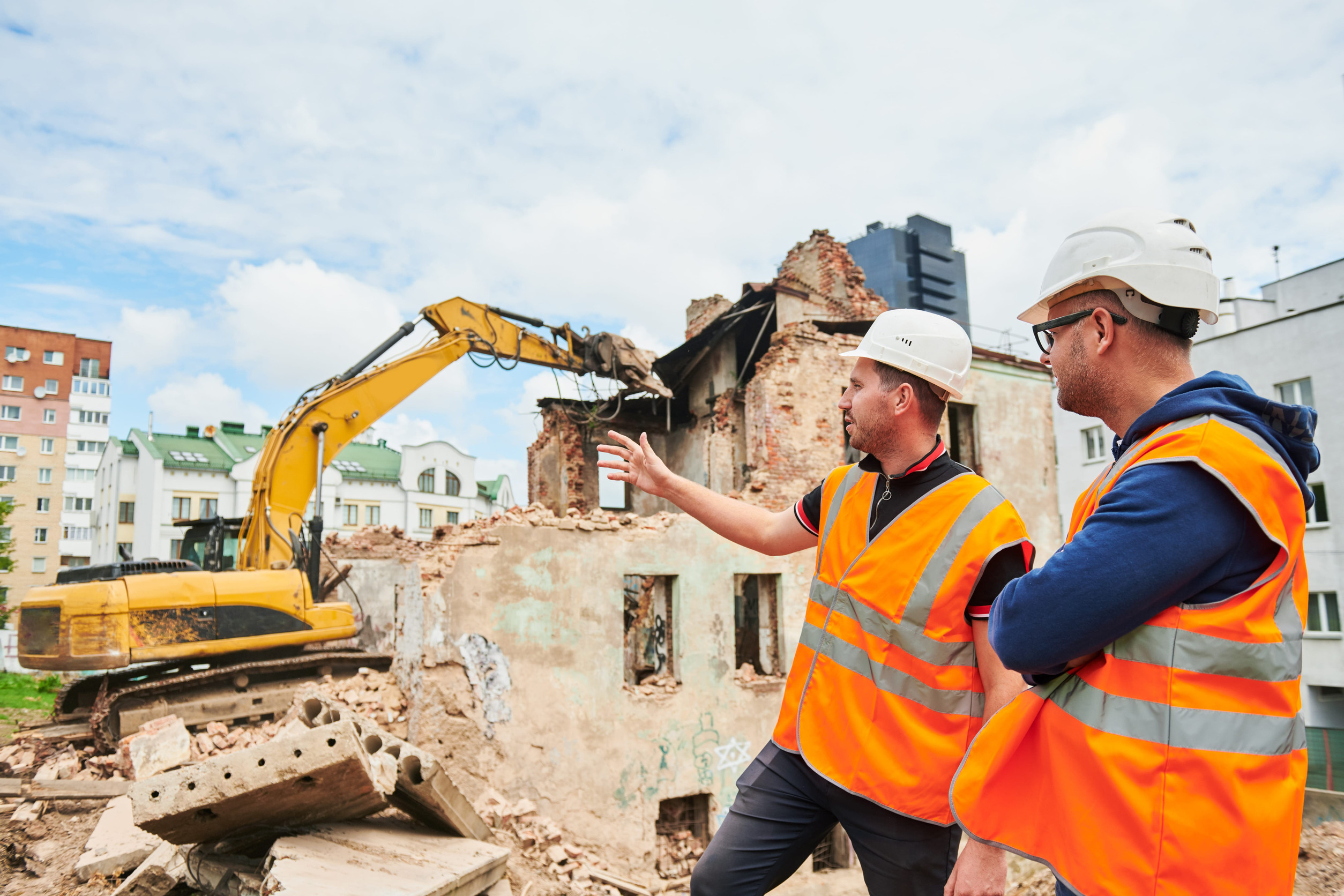
If you are a business owner or manager planning commercial demolition, you need a site cleared without delays, surprises or compliance headaches.
This guide explains what commercial demolition services use to demolish buildings, and how they guarantee a safe, efficient project.
Read on to match the right building demolition methods for your building type, understand the step-by-step process, and know exactly what to expect from your demolition contractor.
What do they use to demolish buildings?
Commercial demolition equipment can include heavy machinery with specialised attachments, and trained crews using hand tools. The exact mix depends on building height, construction type, site constraints, and whether hazardous materials are present.
Mechanical demolition: excavators, high-reach arms and attachments
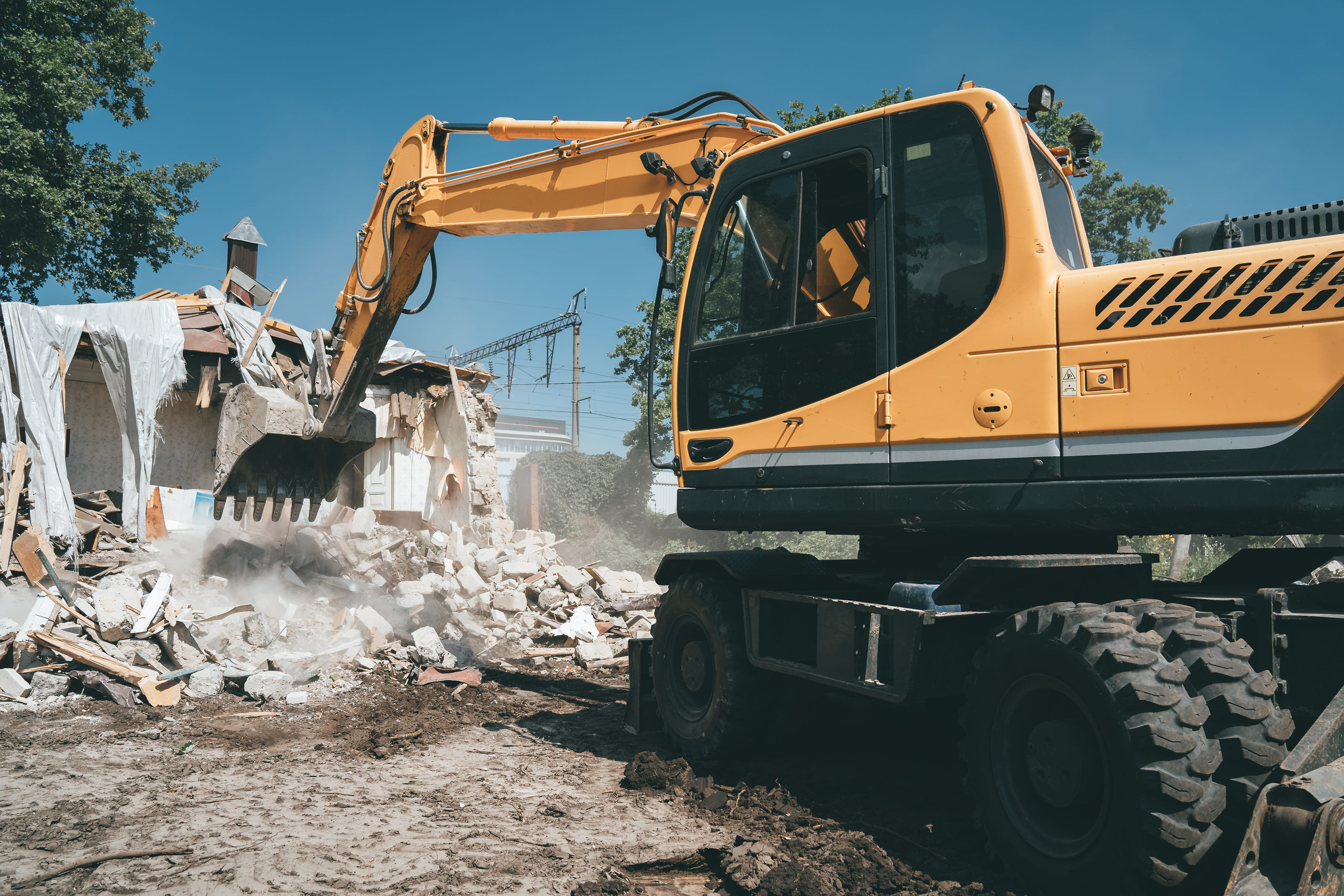
Mechanical demolition is the most common method for commercial and industrial buildings. It uses powered mobile plant such as excavators, bulldozers, loaders and cranes, fitted with hydraulic attachments.
Manual and hand demolition: precision for tight worksites
Manual demolition relies on hand tools and small powered plant for selective or confined work. It is used where machinery access is limited, neighbouring structures must be protected, or parts of a building remain occupied.
Manual methods are slower but allow precise removal of internal fit-outs, partitions, and services with minimal vibration and dust spread.
Specialised techniques: saw cutting, bursting and selective removal
Some projects require more controlled techniques to manage structural loads, noise, or vibration. Common approaches include saw cutting, hydraulic bursting, and selective structural removal.
These methods are often combined with mechanical or manual demolition to suit complex or sensitive sites.
Our solutions for businesses, developers, and site managers
Commercial demolition is not one-size-fits-all. The right solution depends on your building type, programme, and end use of the site.
Office and retail spaces: strip-outs or full demolitions
For retail premises and offices, the work may require a full strip-out before structural demolition. This removes fit-outs, services, and finishes while protecting adjacent tenancies.
This approach supports quick make-good, refurbishment, or complete site clearance for redevelopment.
Warehouses and factories: safe removal of large industrial buildings
Industrial buildings often have long spans, high roofs, and heavy plant. Safe removal requires the right gear and crew to manage structural collapse and material handling.
The aim is a clean, level pad ready for new sheds, yards, or civil works.
Multi-unit and mixed-use sites: motels, unit blocks and larger complexes
Motels and mixed-use buildings require careful planning to ensure neighbouring properties are protected. Mechanical demolition is typically combined with manual methods for interfaces and boundaries.
This method suits staged projects where some sections remain in use or are sold separately.
Partial and internal demolition: targeted works for renovations or staged projects
Partial and internal demolition focuses on specific areas, often before renovations, tenant changes, and staged redevelopments.
Asbestos and hazardous materials: licensed removal and containment
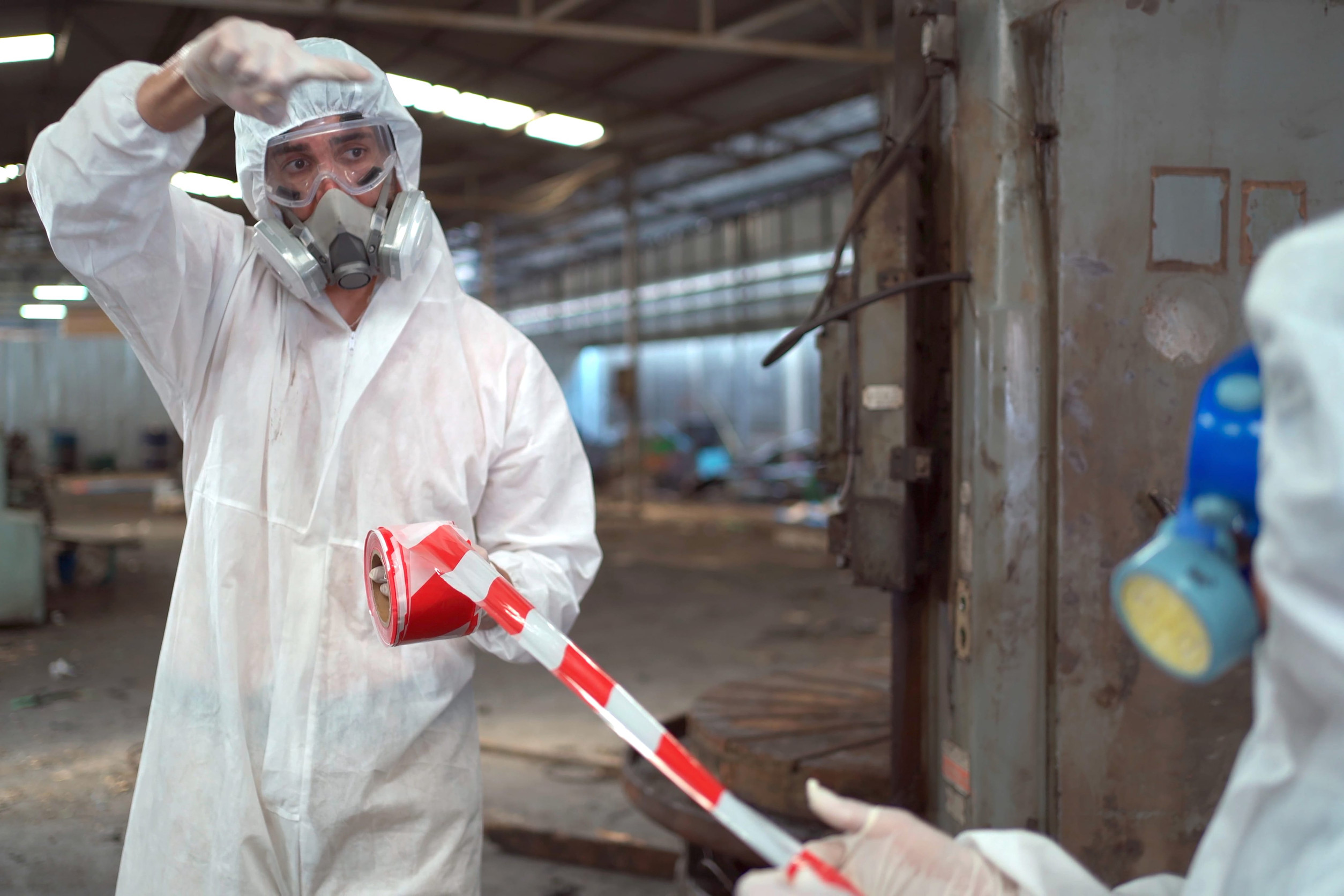
Many older commercial buildings contain asbestos, lead paint, or other hazardous materials. Licensed removal and containment are essential before structural demolition can begin.
Proper hazardous materials management protects workers, neighbours, and project timelines.
Site clearing and remediation: clear, level and ready for construction
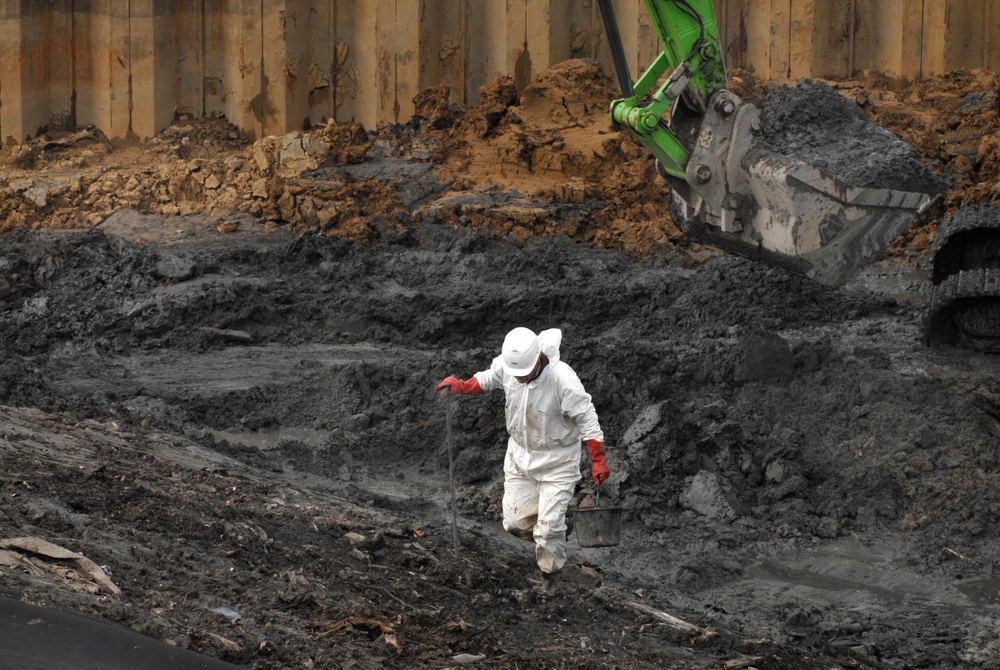
Demolition is only complete when the site is cleared, graded, and remediated to suit the next use. This includes waste management, soil handling, and final levels.
FAQs about commercial demolition equipment and methods
Which equipment is most often used in demolition?
Excavators, crushers, and pulverisers are the main tools, supported by bulldozers, loaders, and cranes.
Do you always need a high-reach excavator?
No. High-reach machines are needed for taller structures or whenever extra reach improves safety. Many low-rise buildings are demolished with standard excavators.
How is asbestos handled before demolition?
A licensed asbestos removalist will survey the site, arrange asbestos removal and disposal, then issue clearance certificates before structural work starts.
How long does a typical demolition project take?
The duration varies for each piece of work, depending on the project complexity and hazards. However, a single-storey retail or warehouse can often be completed within one to three weeks once approvals are in place.
What happens to the demolition waste?
Materials are sorted onsite, with concrete, steel, timber, and metals sent to recycling where possible, and remaining waste transported to licensed facilities.
How Riverina Demolition commercial demolition services can help
We specialise in commercial demolition across South West NSW, from Wagga Wagga and Griffith to Albury, Leeton, Narrandera, Temora, Junee, Gundagai, and Hay.
If you are planning commercial demolition, contact our friendly team for a straightforward assessment and a practical, safety-driven plan.


Leave A Comment